

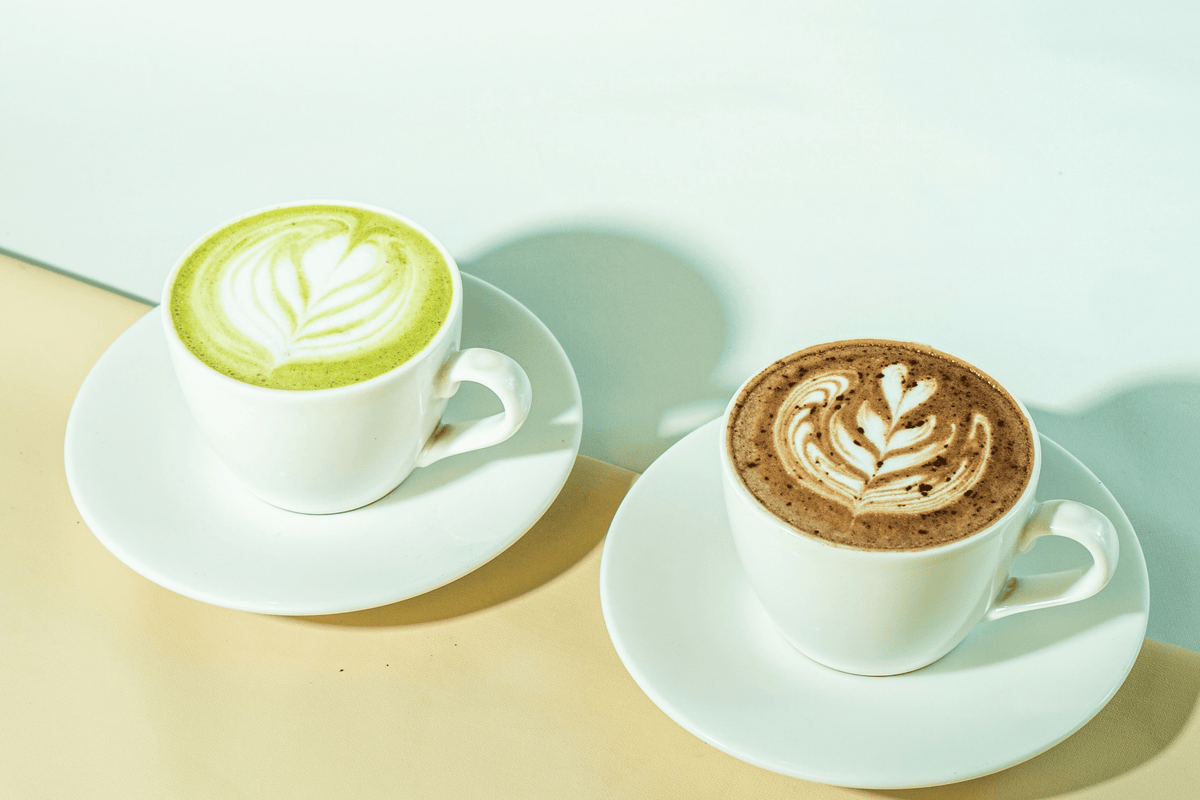
Coffee and matcha can occupy remarkably similar places in the day.
Both might be part of a morning routine, an afternoon reset, or simply a few quiet minutes built around making something you enjoy. Both contain caffeine. Both have centuries of history behind them. Yet what ends up in the cup, and how it gets there, is very different.
So, when comparing matcha vs coffee, which has more caffeine, how do they differ in taste and preparation, and why can the experience of drinking them feel so different?
In general, a typical serving of matcha contains less caffeine than a standard cup of brewed coffee. Matcha also naturally contains L-theanine, an amino acid found in tea, while coffee does not contain it in meaningful amounts. Beyond caffeine, the two drinks differ significantly in flavor, preparation and composition.
The more interesting comparison is not about finding a winner. It is about understanding what makes each one distinctive.
Matcha vs Coffee at a Glance
| Matcha | Coffee | |
|---|---|---|
| Source | Leaves of Camellia sinensis | Seeds found inside coffee cherries |
| Typical caffeine | Roughly 60 to 75 mg in a 2 g serving, although amounts vary | Roughly 80 to 100 mg in an 8 oz brewed cup, although amounts vary |
| L-theanine | Naturally present | Not present in meaningful amounts |
| Preparation | Fine tea powder dispersed directly into water | Ground roasted coffee extracted with water |
| Flavor | Vegetal, savory, umami, gently bitter or subtly sweet | Can range from fruity and floral to chocolatey, nutty or deeply roasted |
| What you consume | The finely ground tea leaf itself | Compounds extracted from roasted coffee grounds |
These numbers are useful starting points, but caffeine content can vary considerably in both drinks.
Does Matcha Have Caffeine?
Yes. Matcha naturally contains caffeine.
Matcha comes from the tea plant, Camellia sinensis, the same species used to produce green tea, black tea, oolong and many other traditional teas.
A serving made with around 2 grams of matcha powder can contain approximately 60 to 75 milligrams of caffeine, based on measurements reported in published research.
That means matcha should not be considered a caffeine-free or particularly low-caffeine alternative to coffee.
The exact amount can vary according to factors including cultivar, growing conditions, harvest, processing and, importantly, how much matcha powder you use.
A drink prepared with one gram of matcha will contain less caffeine than one prepared with three grams.
Coffee varies in much the same way.
Does Coffee Have More Caffeine Than Matcha?
Usually, yes.
A typical 8-ounce cup of brewed coffee commonly contains around 80 to 100 milligrams of caffeine, although there can be substantial variation.
A typical 2-gram serving of matcha often contains somewhere around 60 to 75 milligrams.
But comparing the two is not quite as simple as comparing those numbers.
Cup size matters.
An 8-ounce coffee is relatively small compared with many coffees served in cafés or prepared in larger mugs at home. Brewing method, coffee dose, bean variety and extraction can all influence how much caffeine reaches the cup.
Matcha serving sizes vary too.
For that reason, asking whether coffee or matcha contains more caffeine only tells part of the story.
A more useful question is:
How much coffee or matcha are you actually consuming?
Why Can Matcha Feel Different From Coffee?
This is where the comparison becomes more interesting.
People often describe matcha as providing a different caffeine experience from coffee. You may even see claims online that matcha provides "smooth energy," prevents jitters or eliminates a caffeine crash.
Those claims are stronger than the available evidence allows.
Matcha and coffee both provide caffeine, and the way someone responds to caffeine can depend on the dose, individual sensitivity, frequency of caffeine use and other personal factors.
One important difference, however, is that matcha naturally contains L-theanine.
L-theanine is an amino acid found in tea. Researchers have studied the combination of caffeine and L-theanine and found that the two may influence certain aspects of attention and cognitive performance when consumed together.
That does not mean L-theanine cancels out caffeine or guarantees a particular feeling after drinking matcha.
It does mean that matcha has a different natural chemical composition from coffee, which is one reason scientists continue to study the interaction between its components.
If matcha and coffee feel different to you personally, caffeine may not be the only factor involved.
Matcha and Coffee Are Made in Completely Different Ways
The differences between coffee and matcha begin long before either reaches your cup.
Coffee starts as a fruit.
Coffee cherries grow on coffee plants, and the seeds inside them become what we call coffee beans. After harvesting and processing, green coffee is roasted. The roasted beans are then ground and brewed with water.
During brewing, soluble compounds are extracted from the coffee grounds.
The grounds themselves are normally left behind.
Matcha begins with tea leaves.
Traditional matcha is produced from shaded tea leaves that are processed into tencha before being ground into an extremely fine powder.
When matcha is prepared, the powder is dispersed directly into water.
That means you are consuming the finely ground tea leaf itself rather than steeping the leaves and removing them afterward.
This is one of the fundamental differences between matcha and conventional brewed green tea.
What Does Matcha Taste Like Compared With Coffee?
Perhaps the clearest difference is also the simplest.
They taste completely different.
High-quality matcha can offer a combination of vegetal character, sweetness, gentle bitterness and umami, the savory quality often associated with shaded Japanese teas.
Its texture is distinctive too. Because the powdered leaf remains in the drink, matcha can have a fuller, almost creamy mouthfeel when prepared properly.
Coffee offers a completely different range of flavors.
Depending on origin, variety, processing and roast, coffee may taste:
-
floral
-
fruity
-
citrusy
-
berry-like
-
chocolatey
-
nutty
-
spicy
-
caramel-like
-
deeply roasted
An Ethiopian coffee can taste dramatically different from a coffee grown in Kenya, Rwanda, Guatemala or Peru.
Even coffees from nearby regions can develop remarkably different characteristics.
That variety is part of what makes exploring single-origin coffee so interesting.
Matcha has its own variation as well. Cultivar, growing region, shading, harvest and processing can all influence the final cup.
Neither drink is inherently more complex or sophisticated than the other.
They simply offer two very different sensory experiences.
What Is L-Theanine?
L-theanine is an amino acid naturally found in tea.
It is particularly associated with green tea and shaded Japanese teas.
Tea plants intended for matcha are shaded before harvest, a cultivation technique that influences the chemistry of the developing leaves as well as their flavor.
L-theanine contributes to the broader composition of matcha and has been studied alongside caffeine for its possible effects on attention and cognitive performance.
Coffee does not naturally provide L-theanine in meaningful amounts.
This is one reason why comparing matcha and coffee solely by caffeine content misses some important context.
Two drinks can contain similar amounts of caffeine while still being chemically very different.
Matcha vs Coffee for Antioxidants
Both coffee and matcha contain naturally occurring plant compounds that have attracted scientific interest.
Matcha contains polyphenols, including catechins such as EGCG.
Coffee contains its own complex mixture of compounds, including chlorogenic acids and other polyphenols.
This is sometimes turned into a competition over which drink contains "more antioxidants."
That comparison is not especially useful.
Different testing methods can produce different antioxidant measurements, and the presence of a compound in a food does not automatically translate into a specific health outcome for an individual.
It is more accurate to say that both coffee and matcha contain naturally occurring plant compounds, but their chemical profiles are different.
That tells us much more than assigning one drink an antioxidant score and declaring it the winner.
Is Matcha Healthier Than Coffee?
There is no simple scientific reason to declare either drink universally healthier.
Both have been studied extensively, although the types and quantities of research differ.
Matcha contains caffeine, L-theanine, catechins and other naturally occurring compounds.
Coffee contains caffeine along with chlorogenic acids and a wide range of other compounds created or transformed through roasting and brewing.
What you add to either drink matters too.
Plain coffee and plain matcha are nutritionally very different from drinks containing large amounts of sugar, flavored syrups, sweetened creamers or other additions.
Individual circumstances also matter.
Someone who is particularly sensitive to caffeine may respond very differently from someone who drinks coffee regularly.
For most healthy adults, the U.S. Food and Drug Administration cites 400 milligrams of caffeine per day as an amount not generally associated with negative effects, although caffeine sensitivity varies considerably between individuals.
Certain people may need different limits based on their individual circumstances.
Rather than asking which drink is universally healthier, it is more useful to consider how much caffeine you consume, how each drink fits into your routine and which one you actually enjoy.
Which Is Easier to Prepare?
That depends on how you like to make your drinks.
Coffee can be extremely simple.
A drip machine can prepare a cup at the push of a button.
It can also become highly precise, with brewers weighing coffee and water, adjusting grind size and controlling brewing temperature and extraction time.
Matcha has its own preparation ritual.
Traditionally, matcha powder is sifted, combined with water and whisked using a bamboo whisk called a chasen.
Modern preparation can also be much simpler, especially when making iced matcha or matcha lattes.
Neither drink needs to be complicated.
What matters more is learning how the product you are using responds to water, temperature and concentration.
With matcha, very hot water can increase bitterness and overwhelm some of the tea's more delicate qualities.
Does Matcha Have Less Caffeine Than Coffee?
Usually, yes, when comparing typical servings.
A 2-gram serving of matcha may contain roughly 60 to 75 milligrams of caffeine.
An 8-ounce brewed coffee commonly contains around 80 to 100 milligrams.
But serving sizes vary so much that the amount you actually consume matters more than the category of drink.
A strong matcha made with several grams of powder could contain more caffeine than a small or relatively weak coffee.
The reverse is also true.
Can You Drink Matcha and Coffee in the Same Day?
For many adults, both drinks can fit into the same day.
The important consideration is your total caffeine intake, not simply the number of caffeinated drinks you consume.
Coffee, matcha, tea, energy drinks, chocolate and some medications can all contribute caffeine.
If you are sensitive to caffeine, it can be useful to pay attention to serving size and how late in the day you consume it.
Matcha or Coffee: Which Should You Choose?
You do not necessarily have to choose one permanently.
Choose coffee when you want the aroma of freshly ground beans, the enormous variety created by origin and processing, and the familiar ritual of brewing a cup.
Choose matcha when you want something completely different: vivid green color, fine texture, savory umami and the distinctive character of Japanese tea.
Some mornings might call for coffee.
Others might call for matcha.
The more interesting comparison is not about determining which drink is "better."
Coffee and matcha simply arrive at caffeine through two very different traditions.
Coffee begins with a fruit and is transformed through harvesting, processing and roasting.
Matcha begins with a tea leaf, shaped through careful cultivation, shading and processing before being ground into an extremely fine powder.
Both reward curiosity.
If matcha is the less familiar side of the comparison, explore our guide to Samidori matcha to learn more about cultivar, Uji and what the name on a matcha label can tell you.
Or explore Twiga Coffee’s Uji Kyoto Samidori Matcha and our collection of freshly roasted USDA Organic whole bean coffees to experience both sides of the comparison for yourself.