

ORIGIN · GUATEMALA AND PERU
Central & South American Coffee
Two countries. Two very different coffee landscapes. Two very different roasts.
Guatemala grows coffee across eight recognised regions of highland, five of them volcanic and three of them not. Peru grows it along the eastern slopes of the Andes, on a couple of hundred thousand farms most of which are smaller than five hectares. We roast one of each, and they are the two ends of our range.
EXPLORE BOTH ORIGINSTWO COUNTRIES. TWO CUPS.
Two countries, two very different cups
Two coffee countries with different landscapes, different farm structures and harvests that barely overlap. What they share is that we roast one coffee from each, at opposite ends of our roast scale.

CENTRAL AMERICA
Guatemala
A small country with eight separate coffee regions, ranging from the driest at 32 to 48 inches of rain a year to the wettest at 160 to 200. Anacafé, the national coffee association, has published a cup profile for each one since the early 1990s. Guatemalan coffee has a long-standing reputation for body and chocolate character, which is what stands up to a darker roast.
TWIGA COFFEE
Guatemala
Chocolate · Nutty · Orange
The dark roast in our range, and the one to reach for if you take milk. Taken to 5 of 5 on our roast scale, which builds body and a bittersweet chocolate finish.
Dark roast· 12 oz whole bean· USDA Organic · Fairtrade
SHOP GUATEMALA
SOUTH AMERICA
Peru
Coffee grows in 16 of Peru's 25 regions, almost all of it on the eastern slopes of the Andes and more than 90 per cent of it on plots smaller than five hectares. Around three quarters of the crop sits between 1,000 and 1,800 metres. Peru is the world's leading exporter of organic coffee, and the cups tend to be gentle and sweet rather than loud.
TWIGA COFFEE
Peru
Brown Sugar · Pear · Sage
The quietest coffee in the range, in the best sense. Kept to 3 of 5 on our roast scale, because a heavier roast would cover the pear and the sage completely.
Medium roast· 12 oz whole bean· USDA Organic · Fairtrade
SHOP PERUSo which one should you start with?
If you drink coffee with milk, or you like a cup with weight and a bittersweet finish, start with the Guatemala. If you find most coffee too strong, or you want something you can drink all morning, start with the Peru. Neither is the better coffee. They are built for different mornings.
FROM CENTRAL AMERICA TO THE ANDES
Where coffee grows in Guatemala and Peru
Two maps, because these are two countries and not one region — Guatemala's eight regions inside an area about the size of Tennessee, Peru's growing departments strung out over some seven hundred miles of Andean flank.


Guatemala · eight coffee-growing regions
-
Volcanic San MarcosSAN MARCOS
The wettest of the eight, and the first to flower.
-
Highland HuehueHUEHUETENANGO
The highest and driest.
-
Traditional AtitlánSOLOLÁ
The slopes above Lake Atitlán.
-
Acatenango ValleyCHIMALTENANGO
Under the Fuego volcano.
-
Antigua CoffeeSACATEPÉQUEZ
The driest of the eight.
-
Fraijanes PlateauGUATEMALA
A high plateau above the capital.
-
Rainforest CobánALTA VERAPAZ
Cloud forest, on limestone rather than volcanic soil.
-
New OrienteCHIQUIMULA · JALAPA
The newest region, on metamorphic rock.
The eight regions Anacafé recognises, listed west to east. Anacafé does not rank them and neither do we.

Peru · eight coffee-growing regions
-
AmazonasNORTH
About 15 per cent of the crop.
-
CajamarcaNORTH
The largest producer, about 22 per cent.
-
San MartínNORTH
About 20 per cent of the crop.
-
HuánucoCENTRAL
Central Andean slopes.
-
PascoCENTRAL
High central selva.
-
JunínCENTRAL
About 19 per cent of the crop.
-
CuscoSOUTH
The best-known southern name.
-
PunoSOUTH
The southern limit of Peruvian coffee.
Grouped by growing zone, then north to south. A production share is published for four departments only.
Markers sit at the centre of the department each region is named for, not at a farm, and Twiga does not publish a producing region for either coffee. Sources: Anacafé; USDA FAS Coffee Annual, Peru (2025), using MIDAGRI data; positions from Natural Earth.

TWO COFFEE LANDSCAPES
From Central America to the Andes
Two and a half thousand miles separate these countries, and almost everything about how coffee sits in the landscape changes across that distance. Guatemala grows its coffee on a crowded volcanic isthmus, eight distinct regions inside an area about the size of Tennessee. Peru grows its down the eastern flank of the Andes, over some seven hundred miles of slope falling towards the Amazon.
The agronomy is broadly shared — Arabica, grown in shade, picked by hand, washed with water. The ground, the scale and the season are not.
Guatemala harvests through the northern winter. Peru harvests through the southern one.
SEE THE HARVEST CALENDARGUATEMALA
Eight origins, one country
Anacafé, Guatemala's national coffee association, founded in 1960, has published a cup profile for each of the country's eight growing regions since the early 1990s, defined by climate, soil and altitude. The driest gets under a third of the rain the wettest does, and one of the eight is a cloud forest.

The volcanic five
Five of the eight
Pumice, ash and mineral-rich sandy soils, kept replenished by volcanoes that are still active. Anacafé's profiles for these five all run to acidity and sweetness.
-
Acatenango Valley
Chimaltenango- Altitude
- 4,300–6,500 ft
- Rainfall
- 48–72 in
-
Antigua Coffee
Sacatepéquez- Altitude
- 5,000–5,600 ft
- Rainfall
- 32–48 in
-
Traditional Atitlán
Sololá- Altitude
- 5,000–5,600 ft
- Rainfall
- 72–92 in
-
Fraijanes Plateau
Guatemala- Altitude
- 4,500–6,000 ft
- Rainfall
- 60–120 in
-
Volcanic San Marcos
San Marcos- Altitude
- 4,300–6,000 ft
- Rainfall
- 160–200 in

Limestone and cloud
One of the eight
No volcanic soil at all — limestone and clay under near-permanent cloud, with humidity to 95 per cent. Anacafé's profile here is fresh fruit over a fine, balanced body.
-
Rainforest Cobán
Alta Verapaz- Altitude
- 4,300–5,600 ft
- Rainfall
- 120–160 in

High and non‑volcanic
Two of the eight
The other two of Anacafé's three non-volcanic regions: one the highest and driest in the country, the other planted on metamorphic rock within living memory. Their profiles run heavier — full body and wine notes in Huehuetenango, chocolate in New Oriente.
-
Highland Huehue
Huehuetenango- Altitude
- 5,000–6,500 ft
- Rainfall
- 48–56 in
-
New Oriente
Chiquimula · Jalapa- Altitude
- 4,300–5,600 ft
- Rainfall
- 72–80 in
Guatemala grades its coffee by how high it grew
Higher, cooler-grown coffee ripens more slowly and produces a denser bean, and Guatemala grades on exactly that: Strictly Hard Bean above about 1,350 metres, Hard Bean between roughly 1,200 and 1,350, Semi-Hard Bean between about 1,050 and 1,200. The country's official export reference prices are published in those grades.
We do not claim a grade for our Guatemala. Twiga does not hold a verified altitude or grade designation for this coffee, so none is stated anywhere on this page or on the bag.
RECOGNISED IN LAW
From the seedbed to the tasting
In August 2018, at the 29th National Coffee Congress, Guatemala's Ministry of Culture and Sports declared Intangible Cultural Heritage of the Nation “the traditional knowledge that forms part of the process of coffee production and commercialisation in Guatemala, from the seedbed to the tasting”. The agreement was published in the Diario de Centro América, the country's official gazette.
It is a national designation rather than a UNESCO one, and it covers the knowledge rather than the crop. Anacafé counts more than 125,000 coffee-growing families in Guatemala; they are about 97 per cent of the country's coffee producers and grow about 44 per cent of its coffee.
Acuerdo Ministerial 606-2018, Ministerio de Cultura y Deportes, Guatemala, as recorded in Anacafé's Memoria de Labores 2017-2018. Producer figures: USDA Foreign Agricultural Service Coffee Annual, Guatemala (2025), using Anacafé data.
Regional altitudes and rainfall as published by Anacafé, whose Green Book puts about 98 per cent of Guatemalan coffee under shade.

FROM GUATEMALA, ROASTED BY TWIGA
Guatemala
 Chocolate
 Nutty
Nutty
 Orange
The dark roast in our range, and the one to reach for if you take milk. Deep chocolate and toasted nuts, with an orange note that keeps a heavy cup from going flat.
- Roast
- Dark
- Size
- 12 oz
- Grind
- Whole bean
- Certification
- USDA Organic · Fairtrade
Current lot DARK ROAST
SHOP GUATEMALA5 OF 5 ON OUR ROAST SCALE
The darkest coffee we roast. Taken well into the dark range, which builds body and a bittersweet chocolate finish at the expense of the lighter aromatics.
THE ONE FOR MILK
Depth enough to hold its own in a latte or a flat white, with an orange note that stops a heavy cup going flat.
ROASTED IN CALIFORNIA
Roasted to order and shipped whole bean, like every coffee we make.
PERU
A coffee country built farm by farm
Peru produces around 4.2 million 60-kilo bags a year, which puts it among the ten largest coffee exporters in the world, and more than 90 per cent of that crop grows on plots smaller than five hectares. Around 223,000 families depend on coffee as their main income, and roughly two million people work somewhere along the value chain.
-

A hectare at a time
About 85 per cent of Peru's coffee growers farm holdings of up to five hectares, and the average farm is a little over one. More than 90 per cent of the crop comes off plots smaller than five hectares.
-

Hand-picked, in shade
Most Peruvian coffee is shade-grown at around 2,000 plants a hectare, and the crop is largely hand-picked. Roughly three quarters of it grows between 1,000 and 1,800 metres on the eastern slopes of the Andes.
-

Processed on the farm
Peru washes most of its coffee. Farmers typically handle the pulping, fermenting and drying themselves, or sell cherry to a local processing centre, so much of the quality is decided by the grower rather than by a central mill.
-

Organised into cooperatives
Smallholders join cooperatives for market access and to share the cost of certification. Peru is the world's leading exporter of organic coffee, with around 90,000 hectares certified.


Figures from MIDAGRI and from the USDA Foreign Agricultural Service Coffee Annual, Peru (2025). MIDAGRI states that 85 per cent of Peru's coffee growers work holdings of up to five hectares; USDA puts more than 90 per cent of the crop on plots smaller than five hectares. Neither figure describes Twiga's supply specifically — we do not publish a producing region, cooperative or farm for our Peru.

FROM PERU, ROASTED BY TWIGA
Peru
 Brown Sugar
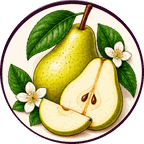 Pear
Pear
 Sage
Sage
The quietest coffee in the range, in the best sense. Brown sugar sweetness and soft pear fruit, with an unusual savoury sage note that gives it more to say than a mild cup usually has.
- Roast
- Medium
- Size
- 12 oz
- Grind
- Whole bean
- Certification
- USDA Organic · Fairtrade
3 OF 5 ON OUR ROAST SCALE
A gentle profile, chosen because this coffee is delicate enough that a heavier roast would cover the pear and the sage completely.
THE ONE FOR PEOPLE WHO FIND COFFEE STRONG
Soft molasses sweetness and mild orchard fruit, with an unexpected savoury, herbal finish that gives it more to say than a mild cup usually has.
ROASTED IN CALIFORNIA
Roasted to order and shipped whole bean, like every coffee we make.
TWO SEASONS, BARELY OVERLAPPING
They are not even picking at the same time
This is the clearest evidence that these are two coffee countries rather than one region. Guatemala picks through the northern winter and into spring. Peru picks through the southern winter. The two seasons touch for about a month.
It also has a practical consequence. Green coffee is seasonal, and an origin that harvests in April is fresh at a different point in the year from one that finished in April.

Guatemala
Approximately November–April
A long season, and the length is a direct consequence of the spread of altitudes and microclimates across the eight regions: the lower, warmer ground ripens months before the highest.
Peru
Approximately April–September
The harvest runs from April into September, with about 85 per cent of the crop picked between April and July and the peak in June and July.
Darker band marks the peak of the harvest, shown only where a source states one.
Guatemala: harvest reported as November to April. Peru: USDA Foreign Agricultural Service Coffee Annual, Peru (2025) — season April to September, peak June to July, about 85 per cent picked April to July. Windows are approximate and move with altitude, region and season. Neither is the crop year of a specific Twiga lot.
BREW THE ORIGIN
How to brew these two
Two coffees at opposite ends of the roast scale do not want the same treatment. These are starting points, taken from our Brew Guide, not rules.
Pour over
1:16
Suits the Peru. A clean extraction keeps the pear and the sage legible, which a heavier method tends to flatten.
French press
1:15
Suits the Guatemala. Full immersion and no paper filter carry the body and the chocolate that the darker roast is there for.
Drip
About 1:17
Works for both, and is the easiest way to taste the difference between them side by side on the same machine.
Cold brew
1:5 by weight, as a concentrate
The Guatemala makes the more familiar cold brew, deep and low in acidity. The Peru makes a lighter, sweeter one.
Our Guatemala has one more note of its own: about 17 g of coffee in an AeroPress, water to the number 4 mark, pressed after about a minute at 175°F, which suits a dark roast.
GOOD TO KNOW
Questions about Central and South American coffee
What people ask us most about these two origins.
What is the difference between Guatemalan and Peruvian coffee?
Guatemala tends towards body and chocolate character, grown across eight regions of volcanic and non-volcanic highland. Peru tends towards gentle sweetness, grown on small farms along the eastern slopes of the Andes. Twiga's own two coffees sit at opposite ends of our roast scale: the Guatemala is a dark roast, 5 of 5, tasting of chocolate, nuts and orange; the Peru is a medium roast, 3 of 5, tasting of brown sugar, pear and sage.
What does Guatemalan coffee taste like?
It depends heavily on the region, which is the point of Anacafé's eight published profiles: Antigua is described as elegant and very sweet, Huehuetenango as intensely acidic with wine notes, New Oriente as full-bodied and chocolatey. Guatemala as a whole has a reputation for body and chocolate character. Twiga's Guatemala, roasted dark, tastes of chocolate, nuts and orange.
What does Peruvian coffee taste like?
Peruvian coffee is generally gentle and sweet rather than loud, which is partly the altitude and partly the fact that over 70 per cent of the crop is the old Typica variety. Twiga's Peru, roasted medium, tastes of brown sugar and pear with an unusual savoury sage note on the finish. These are tendencies, not promises: any single lot depends on its farm, its altitude and its roast.
What are Guatemala's eight coffee regions?
Anacafé recognises Acatenango Valley, Antigua Coffee, Traditional Atitlán, Rainforest Cobán, Fraijanes Plateau, Highland Huehue, New Oriente and Volcanic San Marcos. It has published a distinct cup profile for each since the early 1990s, based on climate, soil and altitude.
Is all Guatemalan coffee volcanic?
No. Five of Anacafé's eight regions are volcanic. Rainforest Cobán grows on limestone and clay, New Oriente on metamorphic rock, and Anacafé describes Highland Huehue as the highest and driest of the country's three non-volcanic regions. Volcanic soil is a real part of the Guatemalan story, but it is not the whole of it.
Where is coffee grown in Peru?
In 16 of Peru's 25 regions, almost all along the eastern slopes of the Andes. The largest producers are Cajamarca at about 22 per cent of the crop, San Martín at about 20 per cent, Junín at about 19 per cent and Amazonas at about 15 per cent. Cusco, Puno, Pasco and Huánuco are also named among the leading producing regions.
When is coffee harvested in Guatemala and Peru?
Guatemala harvests roughly November to April, the long window being a result of its spread of altitudes. Peru harvests roughly April to September, with about 85 per cent of the crop picked between April and July and the peak in June and July. The two seasons barely overlap.
Which Twiga coffee should I choose, the Guatemala or the Peru?
Choose the Guatemala if you take milk, or if you want a cup with weight and a bittersweet chocolate finish — it is the darkest coffee we roast. Choose the Peru if you find most coffee too strong, or want something soft and sweet to drink through the morning. Both are 12 oz, whole bean, USDA Organic and Fairtrade certified.
CONTINUE THE JOURNEY
Every origin tells a different story.
Guatemala and Peru are two of the four origins we roast. The other two are in Africa, and they taste nothing like these.