


THE HOME OF ARABICA
Ethiopian Coffee
Where the coffee plant began, and where it is still most diverse.
Arabica grew wild in Ethiopia's southwestern forests long before anyone thought to plant it, and Ethiopia is still the only place those wild populations survive in natural forest. That extraordinary genetic inheritance is part of why Ethiopian coffee can be so diverse, from the floral delicacy associated with Yirgacheffe to the layered fruit often associated with Sidamo. This is a guide to those differences, and to the three Ethiopian coffees we roast.
EXPLORE THE ORIGINTHE GROWING AREAS
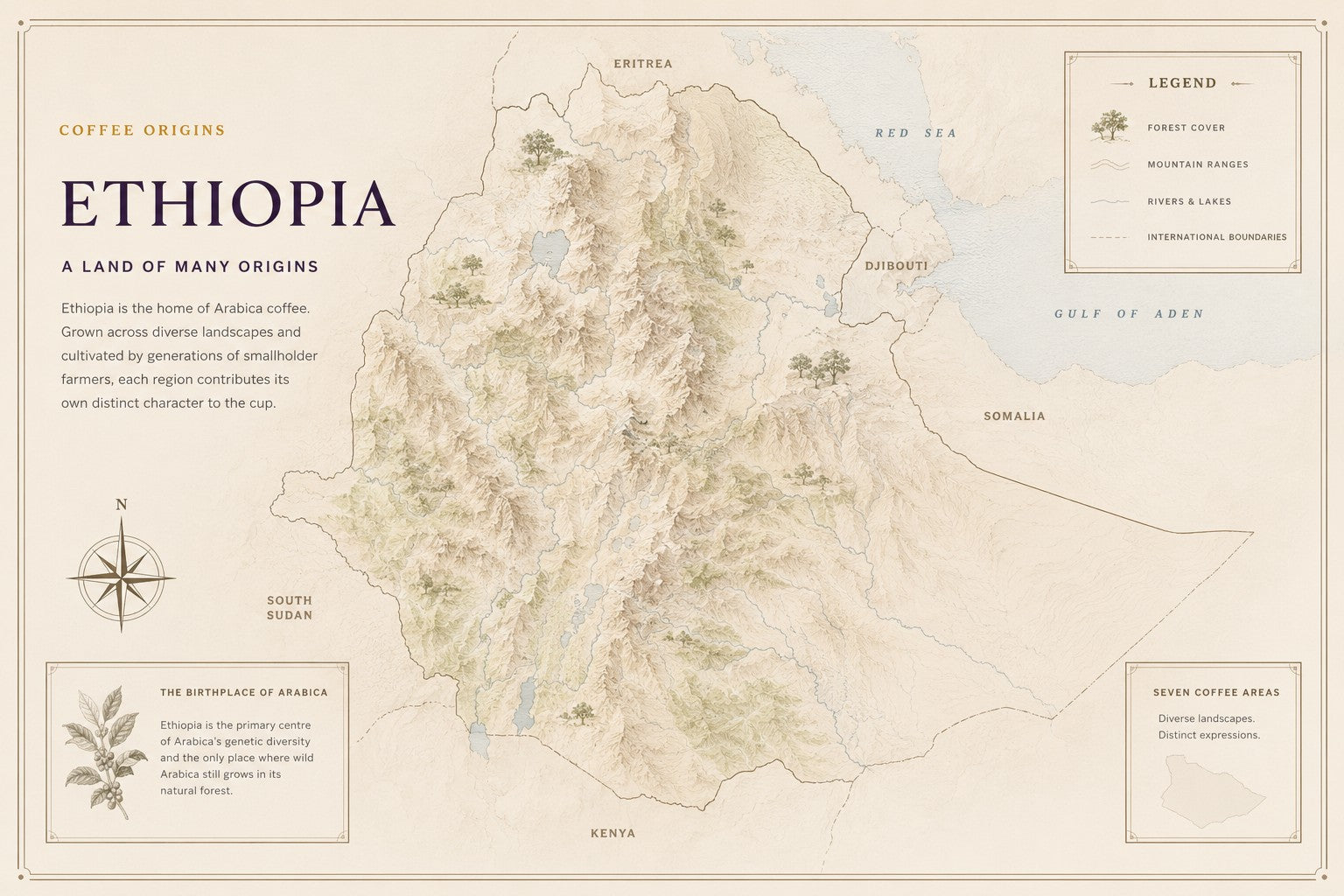
Where Ethiopian coffee grows
Ethiopian coffee is not one thing. It is grown across a wide arc of highlands, by smallholding families who account for more than nine in ten of the country's coffee farms, in areas separated by mountains, rainfall and generations of local practice.
Two of them matter most to us. Yirgacheffe and Sidama sit beside one another in the southern highlands and produce noticeably different coffee. The rest of the map is context, and it is worth knowing.

-
YIRGACHEFFETWIGA
Gedeo, in the southern highlands. Delicate and aromatic, most often washed.
-
SIDAMATWIGA
Southern highlands, north of Gedeo. Layered fruit and a fuller body.
-
GUJI
East of Gedeo, in Oromia. Long traded as Sidamo, now named in its own right.
-
JIMMA
South west. One of the country's largest producing areas.
-
LIMU
South west, neighbouring Jimma. Usually washed.
-
KAFFA
South west forests, where wild and forest grown coffee still stands.
-
HARAR
Eastern highlands. A dry climate, and almost always natural processed.
Areas shown are coffee growing areas as the trade knows them. They are not administrative boundaries.
TERROIR, HONESTLY
Why place shapes the cup
Coffee is an agricultural product, so where it grows changes how it tastes. Elevation affects how slowly a cherry ripens. Shade and rainfall affect how hard the plant is working. Local processing habits, many of them generations old, decide how much of the fruit ever reaches the bean. None of these act alone, and none of them guarantees a result. They are tendencies, and Ethiopia has more of them in play than almost anywhere.
SHADE AND FOREST
Much of Ethiopia's coffee grows beneath taller trees rather than in open rows, in layered plots that hold soil, shade and other crops together.
SMALLHOLDER FARMS
More than nine in ten Ethiopian coffee farms are smallholdings. A lot is usually gathered from many families rather than drawn from one estate.
A DEEP GENE POOL
Ethiopian coffee is grown from a very wide pool of local varieties. The trade often calls them heirloom, which is a useful shorthand rather than a botanical category.
TWO WAYS TO PROCESS
Washed and natural are both widely used. Washed tends toward clarity and floral lift. Natural tends toward fruit sweetness and a heavier body.

A LANDSCAPE RECOGNIZED BY UNESCO
The Gedeo Cultural Landscape
Yirgacheffe sits inside Gedeo, and in 2023 the Gedeo Cultural Landscape was inscribed on the UNESCO World Heritage List. The citation is for a living indigenous agroforestry tradition: coffee and enset cultivated in layers beneath mature native trees, on slopes the Gedeo people have farmed this way for generations. More than nine tenths of the zone is worked under that system.
It is a recognition of a landscape and of the knowledge that maintains it, not a certification of any company or any farm. We mention it because it is the place our Yirgacheffe comes from, and because it is a rare case of coffee growing being recognised as heritage worth protecting.
TWO NEIGHBOURS. TWO CUPS.
Yirgacheffe and Sidamo: two regions, two expressions
They are geographic neighbours in Ethiopia's southern highlands. Gedeo, where Yirgacheffe grows, shares its northern border with Sidama. Yet the two have built distinct reputations, and once you have tasted them beside each other the difference is hard to unhear.

YIRGACHEFFE
Delicate and aromatic
Yirgacheffe is a district in the Gedeo Zone, and the name now travels with coffee from several neighbouring districts around it. Coffees carrying it are best known for aromatic delicacy. Expect floral lift, citrus, and a light body that is sometimes described as tea-like, particularly in washed lots.
TWIGA COFFEE
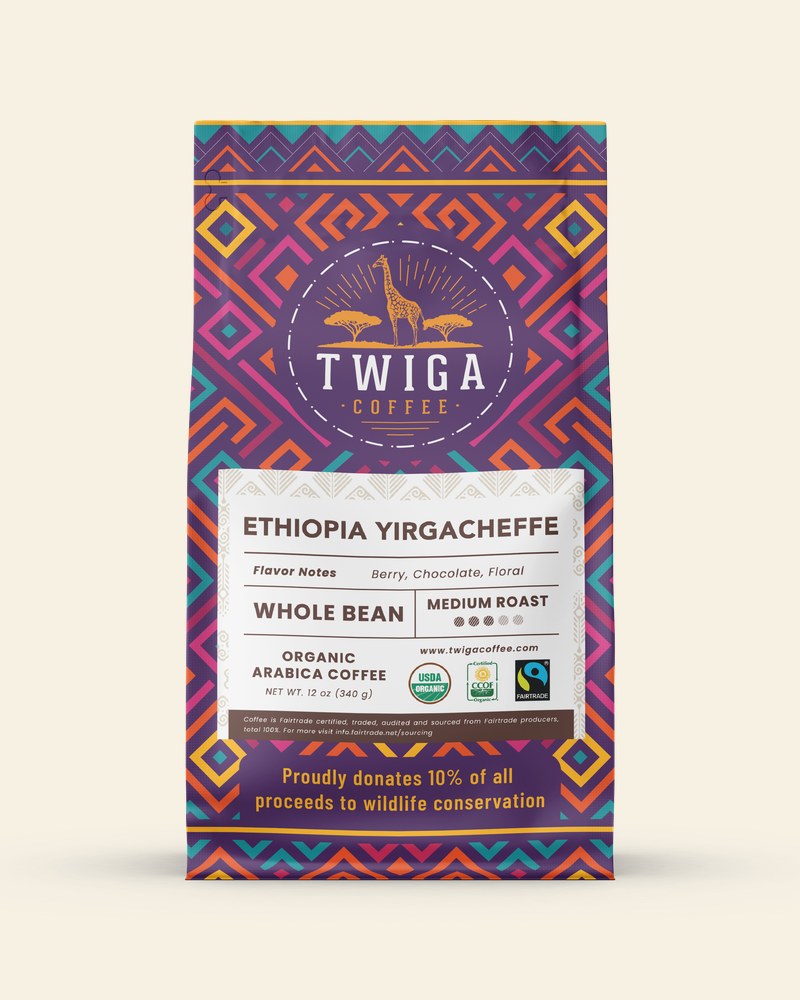
Ethiopia Yirgacheffe
Berry · Chocolate · Floral
Bright and aromatic, with berry and floral sweetness carried over a smooth cocoa note.
Medium roast· 12 oz whole bean· USDA Organic · Fairtrade
TASTE TWIGA YIRGACHEFFE
SIDAMA
Layered and full
Here the naming is worth a sentence. Sidama is the region and the people. Sidamo is the name the coffee travels under, and Ethiopia holds a registered trademark on it, as it does on Yirgacheffe and Harar. Coffees from this area tend to be fuller and more layered than Yirgacheffe, with fruit sweetness, a rounder body and citrus running underneath.
TWIGA COFFEE
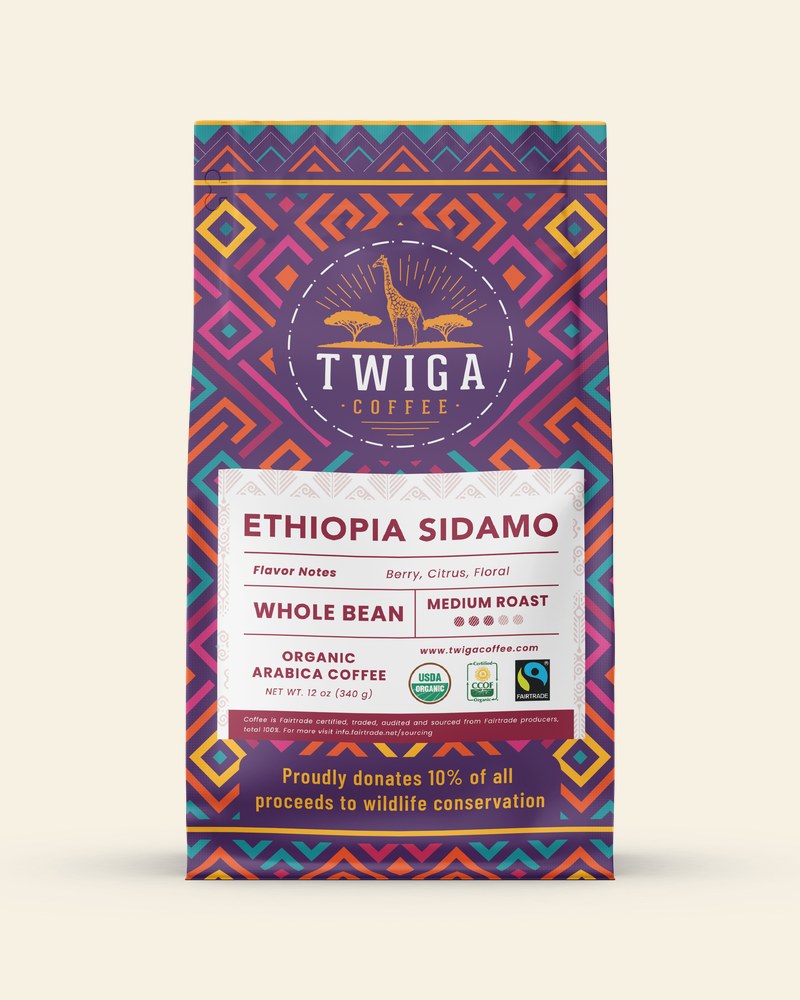
Ethiopia Sidamo
Berry · Citrus · Floral
Berry and citrus arrive together, with a soft floral note trailing behind them. Clean and lively in the cup.
Medium roast· 12 oz whole bean· USDA Organic · Fairtrade
TASTE TWIGA SIDAMOWhat is the difference between Yirgacheffe and Sidamo coffee?
Broadly, Yirgacheffe leans delicate and aromatic while Sidamo leans fuller and more fruit-forward. Yirgacheffe grows in Gedeo, Sidamo in the neighbouring Sidama region, and Yirgacheffe was traded under the Sidamo name before it was recognised in its own right. Guji, just to the east, went through the same separation more recently.
The honest caveat is that processing, elevation, lot selection and roast can move either coffee a long way from its reputation, so treat the distinction as a starting point rather than a rule.
Our own two sit closer together than the general descriptions suggest. Both are medium roasts and both open on berry. The difference is in what follows: chocolate and floral in the Yirgacheffe, citrus and floral in the Sidamo.
THE SHORT ANSWER IS THAT IT DEPENDS
What does Ethiopian coffee taste like?
There is no single Ethiopian flavour, and any guide that offers you one is simplifying. What Ethiopian coffees most often share is aromatic intensity. Past that they diverge, and the things that move them are the growing area, the processing, the elevation, how the lot was selected and how far it was roasted.
- Floral aromatics, jasmine and blossom most often named
- Citrus, running from lemon and lime through to orange
- Berry fruit, especially in naturally processed lots
- A light, clean body in many washed coffees
- Sweetness that reads as fruit rather than sugar
Ethiopian is an origin, not a roast level. You will find Ethiopian coffee roasted light, medium and dark, and the roast will tell you as much about the cup as the country does.
What our three taste like
We roast all three of our Ethiopian coffees to a medium, which keeps the fruit and the florals legible without leaving the cup thin. Four notes cover the three.
 Berry
Berry
 Chocolate
 Citrus
 Floral
| Coffee | Notes |
|---|---|
| Ethiopia Yirgacheffe | Berry · Chocolate · Floral |
| Ethiopia Sidamo | Berry · Citrus · Floral |
| Decaf Ethiopia Sidamo | Berry · Citrus · Floral |
FROM ETHIOPIA, ROASTED BY TWIGA
Find your cup
Three coffees from two neighbouring areas. All medium roast, all 12 oz whole bean, all USDA Organic and Fairtrade certified.



THE SAME ORIGIN, THE SAME CARE
Ethiopian coffee without the caffeine
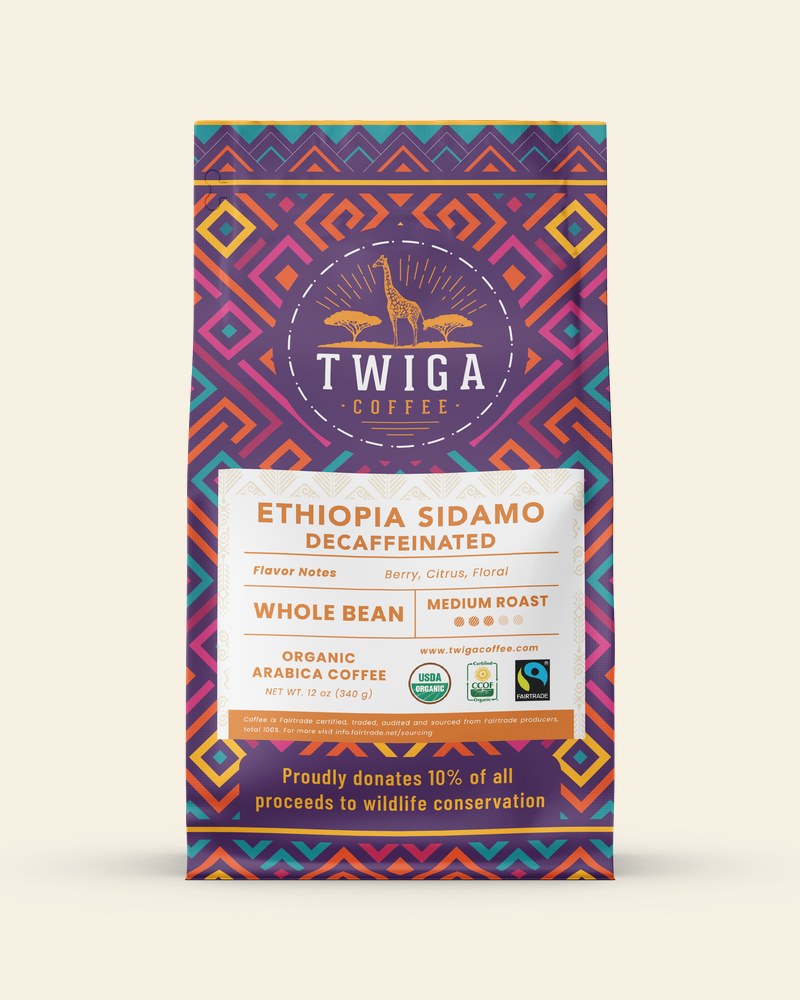
Our Decaf Ethiopia Sidamo keeps the berry, citrus and floral profile you find across our Sidamo offering, without the caffeine.
The caffeine is removed by the Swiss Water Process, which uses only water, temperature and time, with no conventional chemical solvents. Because the method is gentle, that character comes through it intact, so this drinks like a coffee you would have chosen anyway rather than a compromise you settled for.
Medium roast · 12 oz whole bean · USDA Organic · Fairtrade

Swiss Water® Process
BREW THE ORIGIN
How to brew Ethiopian coffee
Aromatic coffees reward a clean extraction, so most of the work happens before the water hits the grounds: grind fresh, weigh what you use, and do not let the water go off the boil. There is no single right method for Ethiopian coffee. These four suit our medium roasts, and the numbers are the ones we actually use.
Pour Over
1:16 · medium grind · 195 to 205°F
Bloom with 60 g of water for 30 to 45 seconds, then pour steadily. The clearest way to hear the florals.
French Press
1:15 · coarse grind · 195 to 205°F · four minutes
Rounder and heavier in the cup, and it holds berry sweetness well.
Drip
About 1:17 · medium grind · 195 to 205°F
Our starting point for a full carafe.
Cold Brew
1:5 by weight, as a concentrate · coarse grind
Steep 12 to 18 hours in the fridge. Sixteen is our starting point. Dilute to taste.
Every ratio here is by weight, and the Brew Guide has the full method for each, along with AeroPress.

BEYOND THE FARM
Coffee as gathering
Ethiopia drinks roughly half of what it grows. Among coffee producing countries that is unusual, and it says something about the place coffee holds there. It is not only an export crop. It is how the day is organised.
The buna ceremony is the clearest expression of that. Green beans are roasted over a flame in the room, ground, and brewed in a jebena, the long necked clay pot that gives the ritual its shape. The coffee is poured in three rounds, each with its own name: abol, then tona, then baraka. Baraka means blessing, and it is the last. The whole thing can run to a couple of hours, which is rather the point. The coffee is the reason to sit down, not an errand to get through.
We are a small California roaster, and we are not going to claim that tradition as ours. We mention it because it is the context our Ethiopian coffees come from, and because the idea that coffee is worth slowing down for is the one we built a company around.
QUESTIONS ABOUT ETHIOPIAN COFFEE
Questions about Ethiopian coffee
The things people most often ask us about coffee from this origin.
What does Ethiopian coffee taste like?
There is no single answer, which is part of what makes Ethiopia interesting. Most Ethiopian coffees share a pronounced aroma, and beyond that you will commonly find floral notes, citrus and berry fruit, often over a light and clean body. The growing area, the processing method and the roast all move the cup, so treat those as tendencies rather than a fixed profile.
What is Yirgacheffe coffee?
Yirgacheffe is a coffee growing area in the Gedeo Zone of southern Ethiopia, named after a district and its main town. Coffee carrying the name is known for aromatic delicacy: floral, citrus toned and light in body, particularly when washed. Ethiopia holds a registered trademark on the name.
What is the difference between Yirgacheffe and Sidamo coffee?
They come from neighbouring areas in the southern highlands, and Yirgacheffe was once traded under the Sidamo name. As a general rule Yirgacheffe is the more delicate and floral of the two, while Sidamo carries a fuller body and more layered fruit. Processing and roast can narrow that gap considerably. Our own Yirgacheffe shows berry, chocolate and floral notes; our Sidamo shows berry, citrus and floral.
Is Sidamo the same as Sidama?
Nearly. Sidama is the region in southern Ethiopia and the name of the people who live there. Sidamo is the name the coffee is traded and sold under, and it is one of three Ethiopian coffee names, alongside Yirgacheffe and Harar, that Ethiopia holds as registered trademarks.
Why is Ethiopian coffee often described as fruity or floral?
Two things contribute. Ethiopia has an unusually deep pool of local coffee varieties, far wider than the handful that dominate most producing countries, and many of them are aromatic. Processing then decides how much of that shows up: naturally processed coffee dries with the fruit still on the bean and tends to taste more of it, while washed coffee tends to read cleaner and more floral.
Is Ethiopian coffee a roast level?
No. Ethiopian describes where the coffee is from, not how far it was roasted. You can buy Ethiopian coffee at any roast level. We roast all three of ours to a medium, which keeps the fruit and floral character legible without thinning the cup.
How should I brew Ethiopian coffee?
Any method you already enjoy will work, and no single one is objectively correct. Because these coffees are aromatic, they reward a clean extraction, so grinding fresh and weighing your coffee and water matter more than the device. Pour over gives the most clarity, French press gives more body, and cold brew suits the fruit sweetness well. Full recipes are in our Brew Guide.
CONTINUE THE JOURNEY
Every origin tells a different story.
Ethiopia is where the plant began. It is not where the story ends.